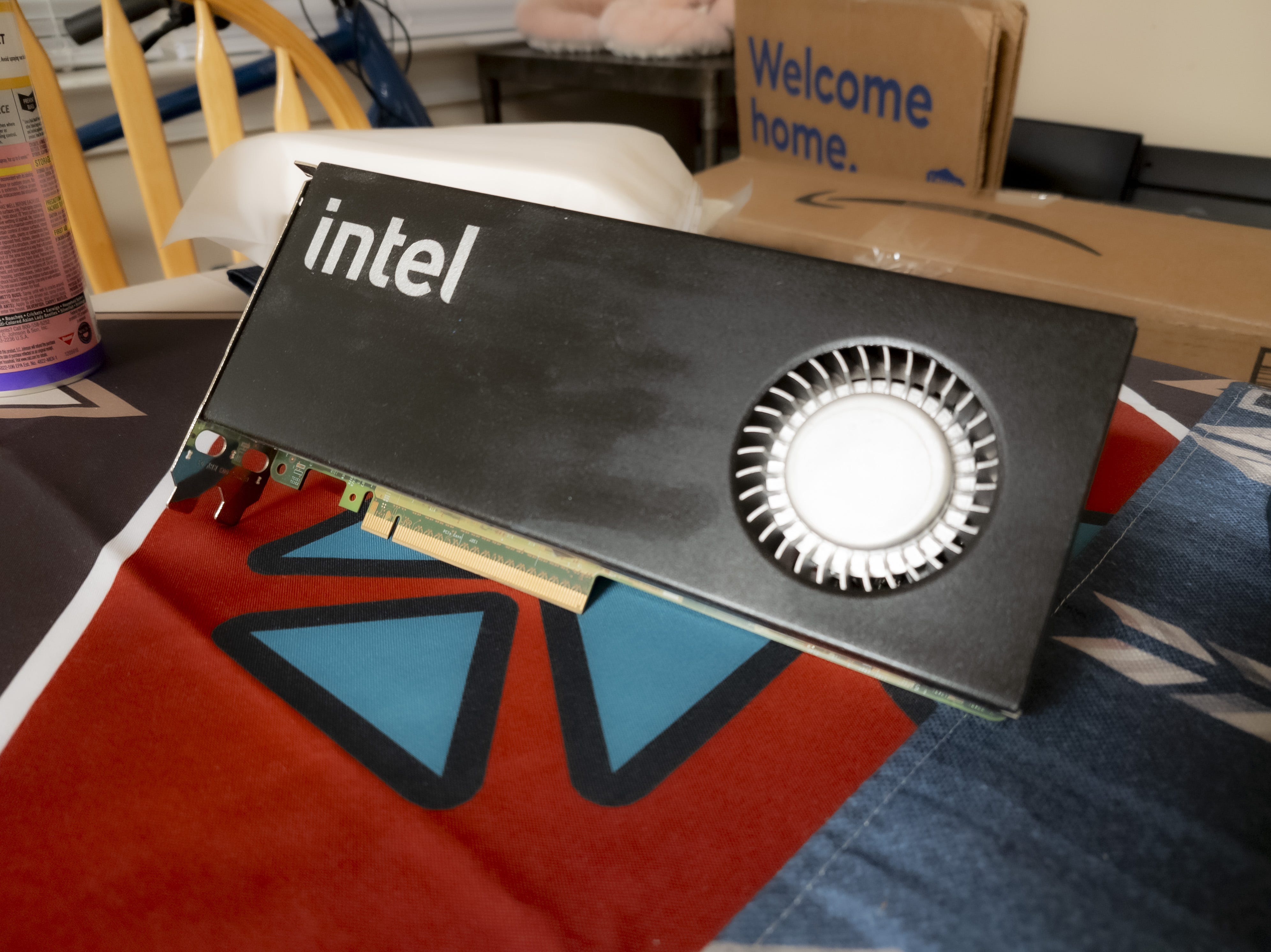
I am proud to announce that for a few months now, Henen-nesw has been back in action and better than ever. Behold:


Henen-nesw was always meant to be the unorthodox Linux dream build of mine since I first got into PC building back in high school. In those days, the Haswell refresh was the bee’s knees, and every gamer wanted to run a GTX 980 with a Core i7-4790K. 16GiB of RAM was considered overkill for most games and the coolest way to flaunt your wallet was by putting dual Intel 730 series SATA SSDs in RAID 0.
When Broadwell came to the desktop, people balked at its beefy iGPU and lack of complete SKU spread and promptly wrote it off so they could wait for Skylake. But I had a different opinion, and this meme explains why:
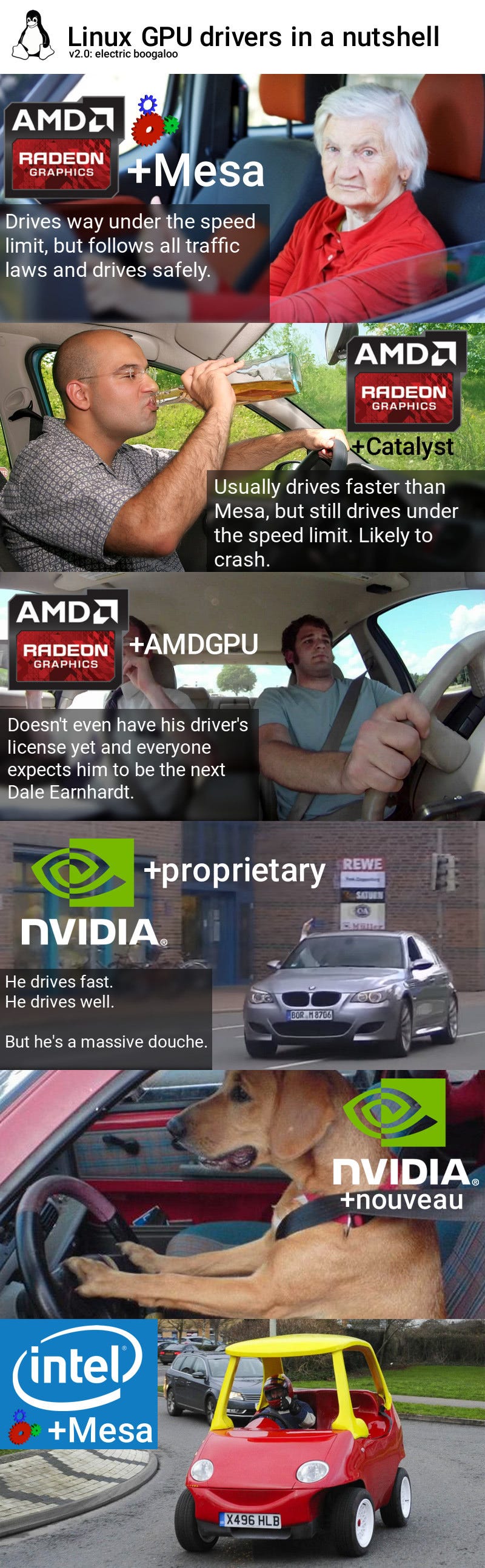
The only good driver (pun intended) worth a damn was in a golf cart, and that meant that getting the Iris Pro GPU in the Broadwell Core i5-5665C and Core i7-5775C was upgrading him to an ATV. To me this was—and still is—the epitome of cool.
Later on, I caught the mITX bug, and this was explored in the previous rendition of Henen-nesw that ran a Skylake Core i3-6100:


As I became more entrenched in low-level programming in my late teens and early twenties, things like the Xeon Phi began to fascinate me from a programming standpoint. As this weblog by now surely reflects, the programmability of a piece of computing hardware has come to dominate my tastes in purchasing and building computers.
I started Grovercomp with the intention of creating a poor man’s petascale supercomputer in my house. The cards for it have all been acquired and they sit in storage together with a handful of rackmount servers to await me having the funding to build them. But on the other hand, having more immediate access to a card for initial prototyping also seemed valuable to me; hence, I filled in that one PCIe slot normally provided for discrete GPUs with an awesome coprocessor from the same era of SATA SSDs and Intel market dominance.
One of the big gotchas about using Xeon Phi cards in current year is that mainline Linux has dropped their drivers from the tree entirely. One can cope with this by either using old distributions (10 is the last Debian to support it, for example), or by using these aftermarket drivers from the University of Peru built for RHEL-based distributions. I took the latter route in the interest of continued security updates, and while I eventually got it to work for a bit, the drivers proved unstable and the card would start randomly dropping and forcing a whole system restart to arrest the fans that rev up to max when the card disconnects. So, for now, I must run Henen-nesw without the card plugged in.
As a consolation for the readers, here is a gallery of the painting process of this 3120A which follows the mock-ups I made years prior:


The finished product: